1. הקדמה
Thank you for choosing the Generic 12V DP50 Self-Priming Diaphragm Pump. This manual provides essential information for the safe and efficient installation, operation, and maintenance of your pump. Please read this manual thoroughly before attempting to install or operate the pump. Keep this manual for future reference.
2. זיכערקייַט אינסטרוקציעס
Always observe the following safety precautions to prevent injury or damage to the pump.
- עלעקטריקאַל זיכערקייַט: זיכער מאַכן אַז די מאַכט צושטעל פּאַסט צו דער פּאָמפּע'ס וואָלומעןtage (12V DC). Disconnect power before performing any installation, maintenance, or troubleshooting. Protect electrical connections from moisture.
- פליסיק קאַמפּאַטאַבילאַטי: Do not pump flammable liquids, corrosive chemicals, or liquids with suspended solids that could damage the pump's internal components.
- טרוקן פליסנדיק: While this is a self-priming pump, prolonged dry running can cause damage. Ensure there is fluid available at the inlet before extended operation.
- ייַנמאָנטירונג: Mount the pump securely on a stable surface. Ensure proper ventilation around the pump to prevent overheating.
- דרוק: Do not exceed the maximum operating pressure of 150 PSI (1.0 MPa).
- טעמפּעראַטור: Do not operate the pump with liquids outside its specified temperature range (typically 0-60°C, though not explicitly stated in provided data, it's a common range for such pumps).
3. פּראָדוקט איבערview
The Generic 12V DP50 is a compact, electric self-priming diaphragm pump designed for various fluid transfer applications. It functions as a booster pump, capable of handling water for agricultural irrigation, industrial drainage, residential water transfer, and off-grid solar-powered pumping systems.
שליסל פֿעיִקייטן אַרייַננעמען:
- Self-priming capability
- Electric DC power operation (12V)
- High-pressure output suitable for boosting applications
- סאָליד און לייטווייט פּלאַן
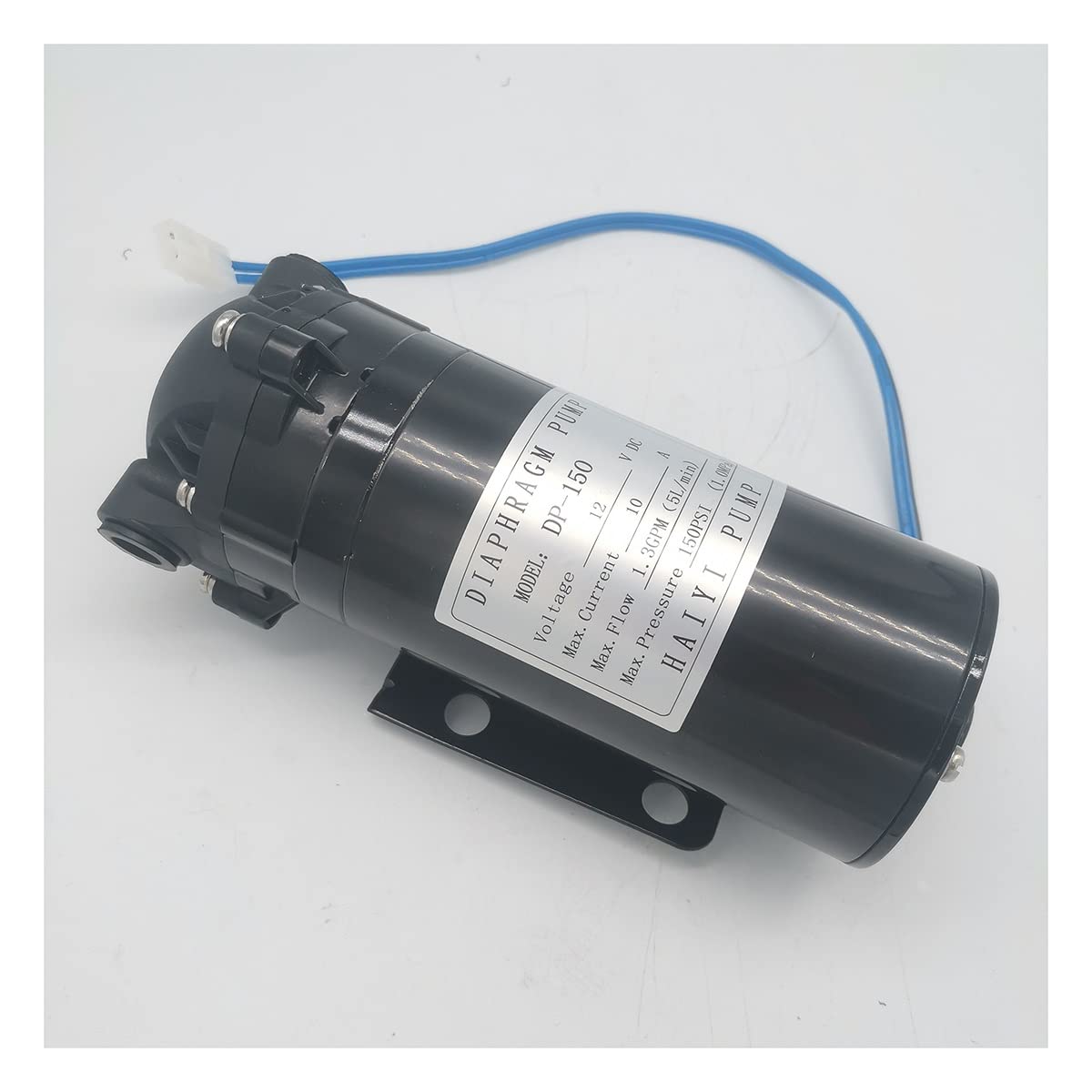
פיגורע 1: Generic 12V DP50 Self-Priming Diaphragm Pump with included fittings. This image shows the main pump unit, its label indicating model DP-150 (representative of the series), 12V DC voltage, 10A max current, 1.3 GPM (5 L/min) max flow, and 150 PSI (1.0 MPa) max pressure. Various connection fittings are also visible.
4. ספּעסאַפאַקיישאַנז
| פּאַראַמעטער | ווערט |
|---|---|
| מאָדעל | DP50 |
| טייל נומער | CFCDVBAZQ-DP50-12V |
| Voltage | 12V DC |
| מאַקס קראַנט | 10A (as per label on similar model) |
| מאַקסימום לויפן קורס | 1.3 GPM (5 L/min) (as per label on similar model) |
| מאַקס דרוק | 150 PSI (1.0 MPa) (as per label on similar model) |
| סטרוקטור | בוסטער פּאַמפּ |
| ברענוואַרג | עלעקטריק |
| פּונקט וואָג | 1.76 פונט (800 גראַמז) |
| פּעקל דימענשאַנז | 1.57 X 0.39 X 0.39 אינטשעס |
5. סעטאַפּ
פֿאָלגט די סטעפּס פֿאַר ריכטיקער אינסטאַלאַציע פֿון אייער דיאַפֿראַגם פּאָמפּע:
- מאָונטינג: Secure the pump to a firm, dry, and level surface using appropriate fasteners through the mounting feet. Ensure the pump is positioned to allow for easy access and proper ventilation.
- ינלעט קאַנעקשאַן: Connect the fluid source to the pump's inlet port. Use appropriate hoses and fittings that are compatible with the fluid being pumped and can withstand the system pressure. Ensure all connections are tight to prevent leaks and air ingress.
- אָוטלעט קשר: Connect the discharge line to the pump's outlet port. Again, use compatible hoses and fittings, ensuring secure, leak-free connections.
- עלעקטריקאַל קשר: Connect the pump to a 12V DC power source. Observe correct polarity: typically, the red wire is positive (+) and the blue wire is negative (-). Incorrect polarity can damage the pump. It is recommended to install an inline fuse appropriate for the pump's maximum current draw (10A).
- פּרימינג: As a self-priming pump, it can draw water from a lower level. However, for optimal performance and to prevent dry running, it is advisable to ensure the inlet line is filled with fluid before initial startup, if possible.

פיגורע 2: Example of pump connections. The image displays the pump with various elbow and straight fittings, illustrating the types of accessories used for connecting inlet and outlet hoses.
6. אַפּערייטינג ינסטרוקטיאָנס
Once the pump is properly installed and connected, follow these steps for operation:
- ערשט טשעק: Before turning on the power, double-check all connections (electrical and fluid) to ensure they are secure and leak-free. Confirm that the fluid source is available.
- מאַכט אויף: Apply 12V DC power to the pump. The pump should begin to operate and draw fluid.
- מאָניטאָר לויפן: Observe the fluid flow. The pump is self-priming, but it may take a few moments to establish full flow, especially if the lines were empty.
- Pressure Switch (if applicable): Some diaphragm pumps include an internal pressure switch that automatically turns the pump off when a certain pressure is reached (e.g., when a faucet is closed) and turns it back on when pressure drops. If your model has this feature, ensure it functions correctly.
- מאַכט אַוועק: To stop operation, disconnect the 12V DC power supply.
7. וישאַלט
Regular maintenance ensures the longevity and reliable performance of your pump.
- דורכקוקן קאַנעקשאַנז: Periodically check all fluid and electrical connections for tightness and signs of wear or corrosion. Tighten any loose connections.
- טשעק פֿאַר ליקס: Regularly inspect the pump and plumbing for any signs of leaks. Address leaks promptly to prevent damage and maintain efficiency.
- ריין עקסטעריאָר: Keep the exterior of the pump clean and free from dirt, dust, and debris to ensure proper heat dissipation.
- פילטער וישאַלט: If an inline filter is used on the inlet side, inspect and clean it regularly to prevent clogging and maintain optimal flow.
- ווינטעריזאַטיאָן (אויב אָנווענדלעך): If the pump is used in an environment where temperatures drop below freezing, drain all fluid from the pump and lines to prevent damage from freezing.
8. טראָובלעשאָאָטינג
זעט די טאבעלע אונטן פאר אלגעמיינע פראבלעמען און זייערע מעגליכע לייזונגען.
| פּראָבלעם | מעגלעך סיבה | לייזונג |
|---|---|---|
| פּאָמפּע טוט נישט קער אויף | No power; incorrect wiring; blown fuse; faulty motor | Check power supply and connections. Verify correct polarity. Replace blown fuse. If motor is faulty, contact support. |
| Pump runs but no fluid flows | Inlet line dry; air leak in inlet; clogged inlet filter; pump head damage | Ensure fluid source is available. Check inlet connections for air leaks. Clean or replace inlet filter. Inspect pump head for damage. |
| נידעריקע שטראָם אָדער דרוק | Clogged filter; restricted inlet/outlet; air in system; worn diaphragm/valves | Clean filter. Check hoses and fittings for obstructions. Bleed air from the system. If internal components are worn, pump may require service. |
| פּאָמפּע ליקס | Loose connections; damaged O-rings/seals; cracked housing | Tighten all fittings. Inspect and replace damaged O-rings or seals. If housing is cracked, the pump may need replacement. |
| פּאָמפּע ציקלט זיך אָן און אויס שנעל | Small leak in system; pressure switch malfunction; insufficient fluid supply | Check for small leaks. Inspect pressure switch. Ensure adequate fluid supply. |
9. שטיצן
For any questions regarding the Generic 12V DP50 Self-Priming Diaphragm Pump, or if you encounter issues not covered in this manual, please contact our customer service team. Our professional support staff is available to provide assistance and solutions.
While specific warranty details are not provided in this document, please retain your proof of purchase for any warranty claims.


