
1. הקדמה
The URayCoder UHE265-1L-4K is an advanced HDMI to Ethernet IP Video Audio Encoder designed for professional live streaming and video transmission. It supports H.265 and H.264 dual encoding, enabling 4K UHD (3840x2160) video input and output. This device facilitates stable and efficient transmission of video streams across various network environments and platforms.
שליסל פֿעיִקייטן:
- 4K UHD Support: Supports 4K (3840x2160) video input and output at 30fps, and up to 120fps at 2K and lower resolutions.
- Dual Encoding: Equipped with H.265 / H.264 dual encoding chip for versatile compatibility.
- מולטי-פּראָטאָקאָל קאַמפּאַטאַבילאַטי: Supports HTTP, RTSP, RTMP(S), SRT, HLS(M3U8), MP4, Multicast (UDP, RTP, PTL), ONVIF, FLV, WebRTC, TRTC, ICECAST.
- Multi-Platform Streaming: Simultaneously stream to platforms like YouTube, Facebook, Twitch, and Vimeo.
- קוסטאָמיזאַבלע סעטטינגס: Allows adjustment of video resolution, frame rate, bitrate, OSD (text, logo, timestamp), and video editing functions (cropping, rotation, flipping, mirroring).
- Dual Audio Input: Supports HDMI embedded audio and line-in audio with adjustable sound quality.
- HDCP 1.4 Decryption: Decodes various HDMI Ultra HD video sources.

Image 1.1: The advanced H.265/H.264 dual encoding chip at the core of the URayCoder encoder, ensuring powerful and stable performance.

בילד 1.2: איבערview of the URayCoder encoder highlighting key features such as HEVC encoding, multi-channel streaming, 4K UHD resolution, and multiple protocol support.
2. פּראָדוקט איבערview
This section details the physical components and ports of the URayCoder UHE265-1L-4K encoder.
פראָנט פּאַנעל:
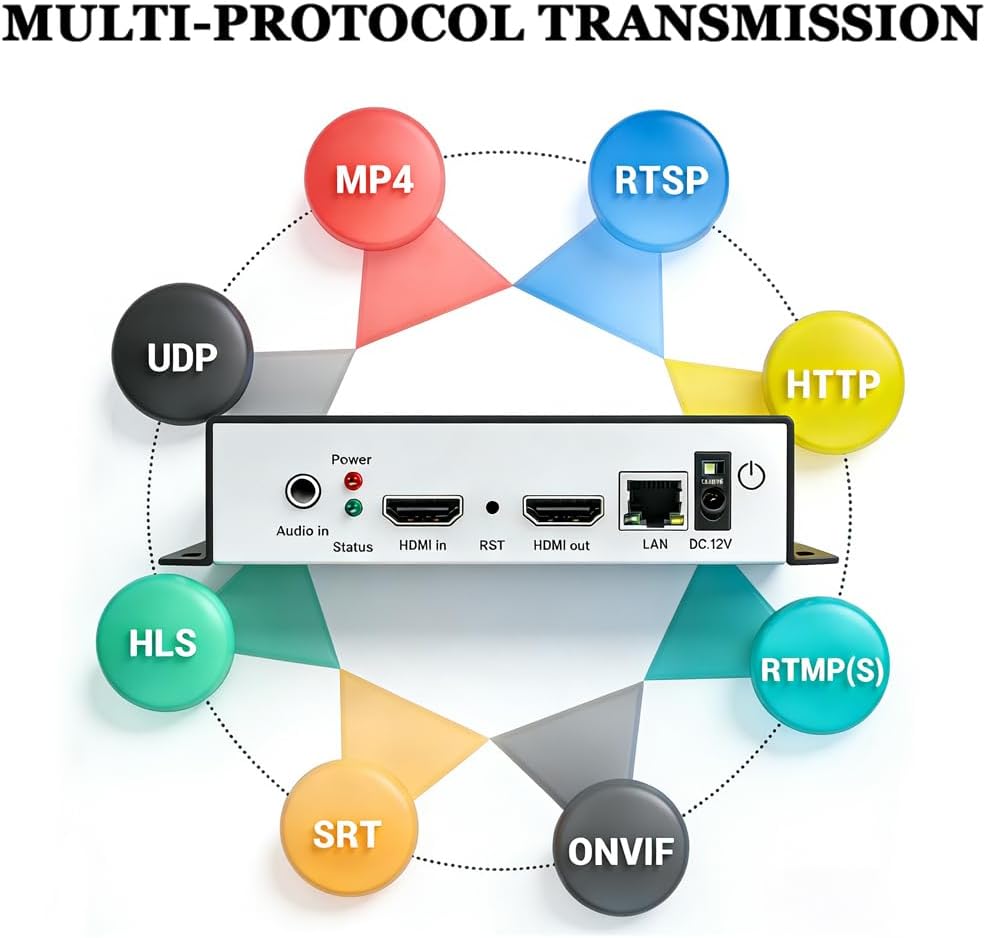
Image 2.1: Front panel of the URayCoder encoder, showing the Audio In port, Status LEDs, HDMI In, RST (Reset) button, HDMI Out, LAN port, and DC 12V power input.
- אַודיאָ אין: 3.5mm jack for external audio input.
- סטאַטוס לעדס: Indicators for Power and Status.
- HDMI אין: Connects to the HDMI video source.
- RST: באַשטעטיק קנעפּל.
- HDMI אַרויס: HDMI לופּ-אויס פּאָרט פֿאַר לאָקאַלע אַרויסווייַזן.
- לאן: עטערנעט פּאָרט פֿאַר נעץ פֿאַרבינדונג.
- DC 12V: מאַכט אַרייַנשרייַב פּאָרט.
ריר פּאַנעל:

Image 2.2: Rear panel of the URayCoder encoder, showing ventilation and product information.
The rear panel primarily features ventilation openings for heat dissipation and product labeling.
3. סעטאַפּ גייד
Follow these steps to set up your URayCoder HDMI encoder for operation.
3.1 האַרדוואַרע קאַנעקשאַן
- פאַרבינדן HDMI מקור: Use an HDMI cable to connect your video source (e.g., camera, set-top box, laptop) to the הדמי אין port on the encoder.
- פֿאַרבינדן דעם עקראַן (אָפּציאָנעל): If you require a local display, connect an HDMI cable from the HDMI אָוט (loop-out) port on the encoder to your display monitor.
- קאָננעקט אַודיאָ (אָפּטיאָנאַל): If using external audio, connect your audio device to the אַודיאָ אין 3.5 מם דזשאַק.
- פאַרבינדן נעץ: פאַרבינדן אַן עטהערנעט קאַבלע פֿון די לאַן port on the encoder to your router or network switch.
- פאַרבינדן מאַכט: שטעקט אריין דעם 12V DC פאוער אדאפטער אין דעם DC 12V port on the encoder and then into a power outlet. The Power LED should illuminate.

Image 3.1: A typical connection diagram illustrating how to connect the URayCoder encoder to an HDMI source, a local display, a network router, and streaming platforms.
3.2 אַקסעס די Web צובינד
After connecting the hardware, you can access the encoder's web צובינד פֿאַר קאַנפיגיעריישאַן.
- Ensure your computer is on the same network as the encoder.
- עפענען א web בראַוזער (למשל, קראָום, פייערפאָקס).
- Enter the encoder's default IP address in the address bar. (Refer to the device label or included documentation for the default IP address, typically 192.168.1.168 or similar).
- Log in using the default username and password (usually 'admin' for both, refer to documentation).
4. אַפּערייטינג ינסטרוקטיאָנס
This section guides you through configuring the encoder via its web צובינד.
4.1 סטאַטוס בלאַט
Upon logging in, the Status page provides an overview of the encoder's current operation, including running time, input resolution, collected frames, and network status.
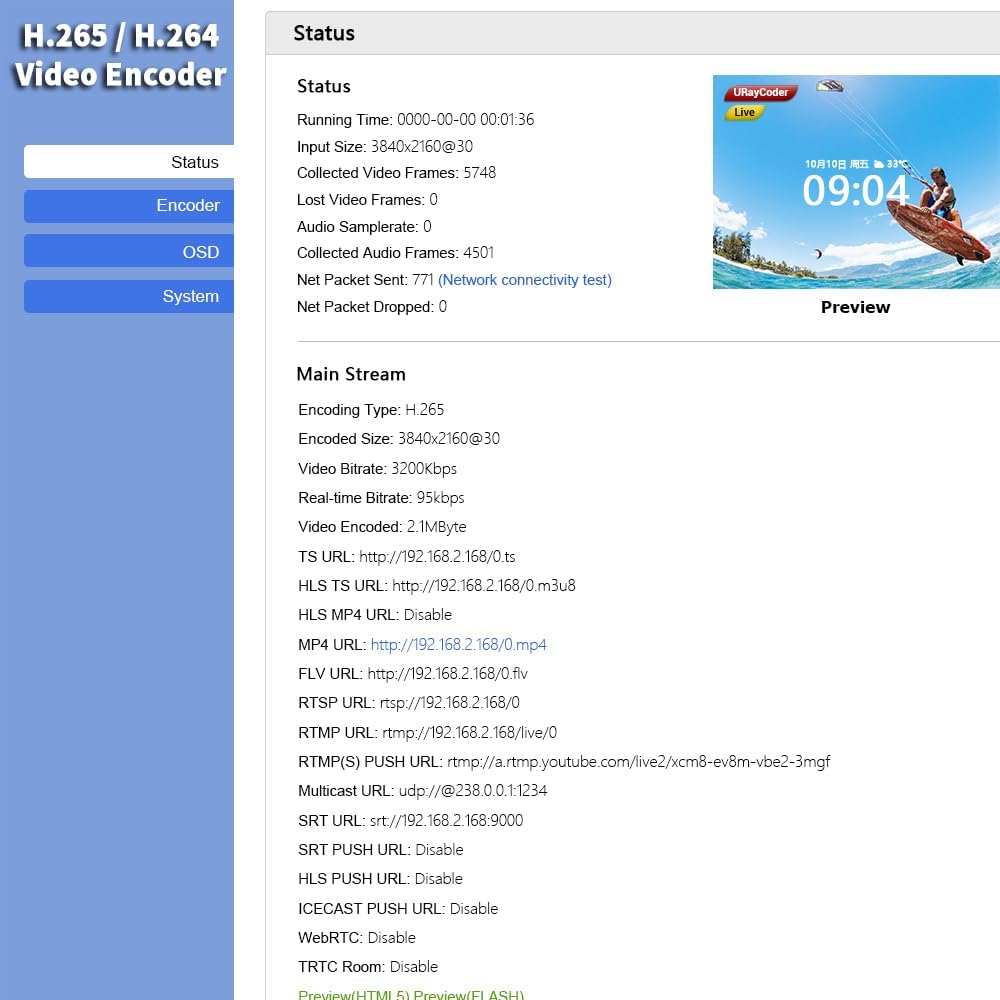
בילד 4.1: די web interface status page displaying real-time operational data and stream URLs.
4.2 Encoder Settings (Main Stream)
Navigate to the 'Encoder' section, then 'Main stream' to configure video encoding parameters.

Image 4.2: Main stream settings page, allowing configuration of encoding type (H.265/H.264), resolution, frame rate, bitrate, and various streaming protocols.
- קאָדירונג טיפּ: Select H.265 or H.264.
- רעזאלוציע: Choose output resolution (e.g., 3840x2160, 1920x1080).
- FPS: שטעלן די ראַם קורס.
- ביטראַטע: Adjust the video bitrate for quality and bandwidth control.
- Protocol Settings: Enable and configure URLs for various streaming protocols (RTSP, RTMP(S), HLS, UDP, SRT, etc.).
4.3 OSD (On-Screen Display) Settings
The 'OSD' section allows you to add custom text, scrolling captions, logos, and timestamps to your video stream.

Image 4.3: OSD settings interface, where users can enable and customize text, scroll text, or time displays, including font size, color, and background.
- Enable/Disable Zones: Configure up to three OSD zones.
- טיפּ: Select text, bitmap (logo), scroll text, or time.
- שטעלע: Set X and Y coordinates for placement.
- Text/Logo Upload: Enter text or upload a logo image.
- Font/Color: Customize font size, color, and background.
4.4 אַודיאָ סעטטינגס
In the 'Audio' section, you can configure audio input and encoding parameters.
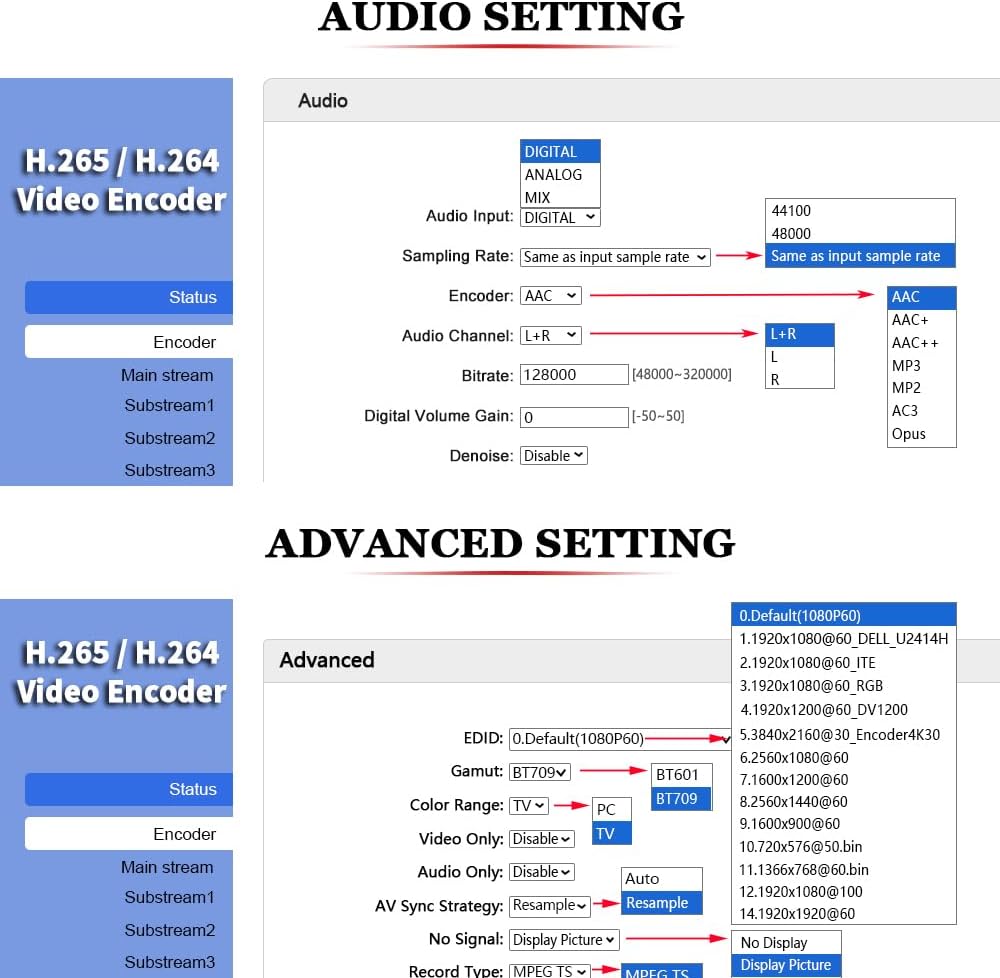
Image 4.4: Audio settings page, allowing selection of audio input type (digital/analog), sampling rate, encoder type (AAC, MP3), channel, bitrate, and digital volume gain.
- אַודיאָ אַרייַנשרייַב: Select Digital (HDMI embedded) or Analog (Line-in).
- Sampלענג קורס: Set the audio sampלענג קורס.
- ענקאָדער: Choose audio codec (e.g., AAC, MP3).
- ביטראַטע: Adjust audio bitrate.
- Digital Volume Gain: קאָנטראָלירט די אַודיאָ באַנד.
4.5 אַוואַנסירטע סעטטינגס
The 'Advanced' section provides options for EDID management, color range, and other system-level configurations.

Image 4.5: Advanced settings page, offering options for EDID, color range, and other fine-tuning parameters for video output.
5. וישאַלט
Proper maintenance ensures the longevity and optimal performance of your URayCoder encoder.
5.1 אַלגעמיינע קער
- Keep the device in a cool, dry, and well-ventilated area.
- Avoid exposing the device to direct sunlight, high temperatures, or excessive humidity.
- רייניקט די אויסערליכע זייט מיט א ווייכן, טרוקענעם טוך. ניצט נישט קיין פליסיקע רייניגער אדער עראזאלן.
- זיכער מאַכן אַז אַלע קייבלס זענען זיכער פארבונדן און נישט אונטער שפּאַנונג.
5.2 פירמוואַרע דערהייַנטיקונגען
Periodically check the URayCoder official website for firmware updates. Firmware updates can improve performance, add new features, or fix bugs. Follow the instructions provided with the firmware update package carefully to avoid damaging the device.
6. טראָובלעשאָאָטינג
די סעקציע באהאנדלט אלגעמיינע פראבלעמען וואס איר קענט באגעגענען און גיט לייזונגען.
6.1 No Video Output/Signal
- Check HDMI Cables: Ensure all HDMI cables are securely connected to both the source and the encoder. Try different HDMI cables if necessary.
- Verify HDMI Source: Confirm that your HDMI source is powered on and outputting a signal. Test the source with a direct connection to a display.
- ינפּוט האַכלאָטע: Ensure the input resolution from your source is supported by the encoder.
- הדקפּ: The encoder supports HDCP 1.4. If your source uses a higher HDCP version, it might cause compatibility issues.
6.2 נעץ פֿאַרבינדונג פּראָבלעמען
- טשעק עטערנעט קאַבל: Ensure the Ethernet cable is properly connected to the encoder's LAN port and your router/switch.
- נעץ קאַנפיגיעריישאַן: Verify that the encoder's IP address, subnet mask, and gateway settings are correct and compatible with your network. If unsure, try resetting the encoder to factory defaults (refer to the reset button on the front panel).
- Firewall/Router: Check your network firewall or router settings to ensure they are not blocking the encoder's communication.
6.3 Streaming Problems (Buffering, Disconnections)
- נעץ באַנדווידט: Ensure your internet connection has sufficient upload bandwidth for your chosen video bitrate and resolution.
- Encoder Bitrate: Reduce the video bitrate in the encoder settings if your network bandwidth is limited.
- Streaming Platform Settings: Verify that the streaming settings (stream key, server URL) on the encoder match those provided by your streaming platform.
- Router/Switch Performance: A congested or underperforming router/switch can cause issues. Try connecting the encoder directly to a high-performance network port if possible.
7. ספּעסאַפאַקיישאַנז
Below are the detailed technical specifications for the URayCoder UHE265-1L-4K HDMI to Ethernet IP Video Audio Encoder.
| שטריך | באַשרייַבונג |
|---|---|
| סאָרט | UrayCoder |
| מאָדעל נאָמען | UHE265-1L-4K |
| קאַנעקטיוויטי טעכנאָלאָגיע | הדמי, עטהערנעט |
| קאַנעקטער טיפּ | HDMI |
| האַכלאָטע | Max 3840x2160 Input and Output |
| ווידעא קאָדעק | ה .265, ה .264, מדזשפּעג |
| שטיצט אינטערנעט באַדינונגס | YouTube, Facebook, Ustream, Livestream, Twitch, Vimeo, Streamspot, Dacast, Tikilive, Netrmedi, etc. |
| פאָרם פאַקטאָר | Video Encoder Box |
| פּראָדוקט דימענשאַנז | 7"ל x 5"בר x 1"ה |
| קאַמפּאַטאַבאַל דעוויסעס | Devices with HDMI Output |
| מאַכט אַרייַנשרייַב | DC 12V |
8. וואָראַנטי און שטיצן
URayCoder is committed to providing reliable products and excellent customer service.
8.1 וואָראַנטי אינפֿאָרמאַציע
All URayCoder video encoders come with a לעבנס-פֿרײַע גאַראַנטיע. This warranty covers manufacturing defects and ensures long-term product reliability.
8.2 טעכניש שטיצן
URayCoder provides לעבנס-פֿרײַע טעכנישע שטיצע for all its products. If you encounter any issues or have questions regarding setup, operation, or troubleshooting, please contact URayCoder customer support through their official webפּלאַץ אָדער די קאָנטאַקט אינפֿאָרמאַציע צוגעשטעלט מיט דיין קויפן.
8.3 קוסטאָמיזאַטיאָן באַדינונגס
URayCoder also offers secondary development and feature customization services to meet enterprise-level personalized needs. This includes shell pattern printing, logo addition, and hardware/function development.

